Decentralized Trust
The Future of Academic Credentials: Building a Global Trust Network for Non-European Qualifications
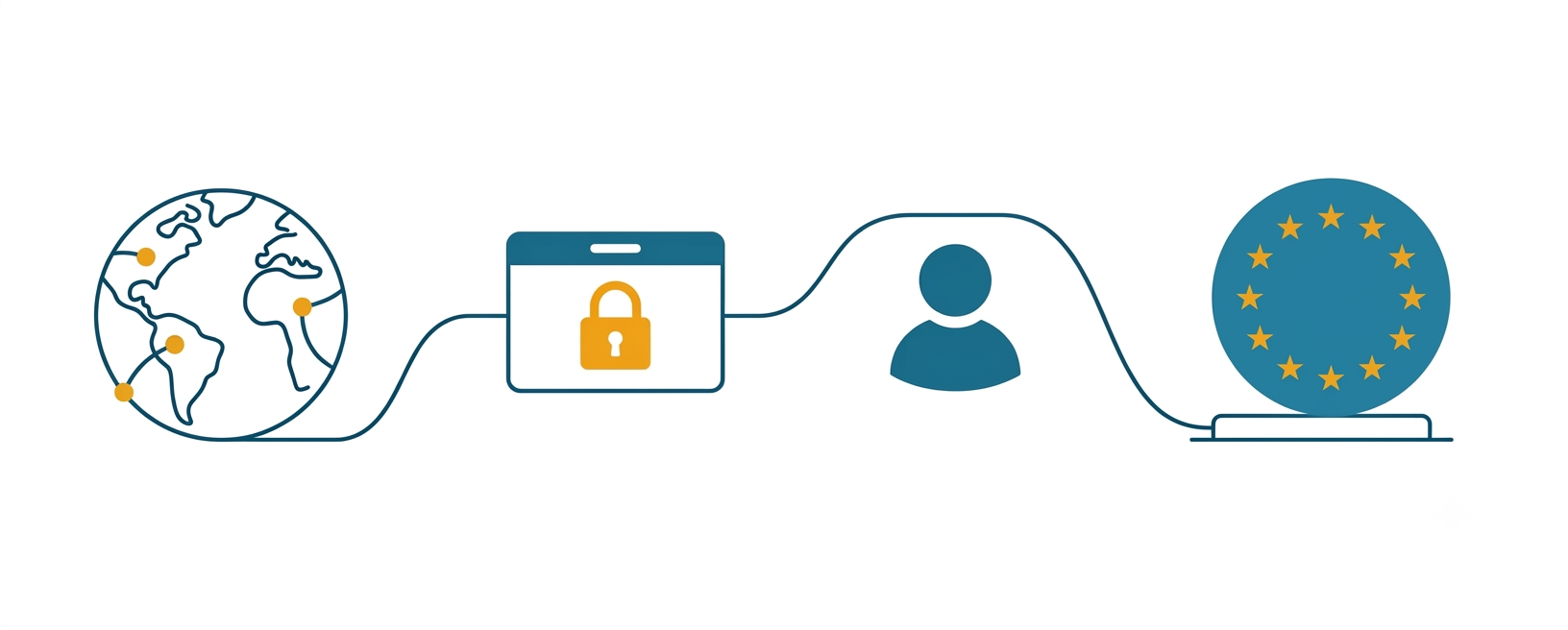
Evaluating incoming international credentials, particularly from non-European educational systems, remains one of the most resource-intensive challenges in credential management.
While European institutions benefit from harmonized frameworks like Bologna and EHEA guidelines, managing incoming academic records from Asia, Africa, Latin America, and North America often presents a stark contrast. Evaluators face fragmented university registries, unstandardized document formats, and varying verification protocols. In 2026, relying on manual outreach to verify non-European degrees is no longer sustainable.
The Cross-Border Verification Crisis Beyond Europe
Global student and professional mobility is at an all-time high, yet credential verification systems remain isolated within regional and institutional silos.
Traditional credential evaluation relies on a chain of manual checks:
- Fragmented Databases: Evaluators must navigate thousands of non-European university portals, each with different access rules and security standards.
- Manual Communication Bottlenecks: Confirming degree authenticity often requires direct email outreach, physical mail, or third-party phone calls across different time zones and languages.
- High Exposure to Fraud: Sophisticated document tampering and unverified PDF transcripts make detecting illegitimate non-European qualifications increasingly difficult without direct institutional access.
This lack of global standardization creates severe operational friction, driving up evaluation backlogs and delaying student admissions, professional licensing, and employment clearance.
How Digital Trust Networks Streamline Credential Recognition
Rather than requiring evaluation bodies and employers to contact non-European universities individually, digital trust networks establish a shared, secure infrastructure.
In a global trust ecosystem, the verification flow shifts from manual inquiry to real-time validation:
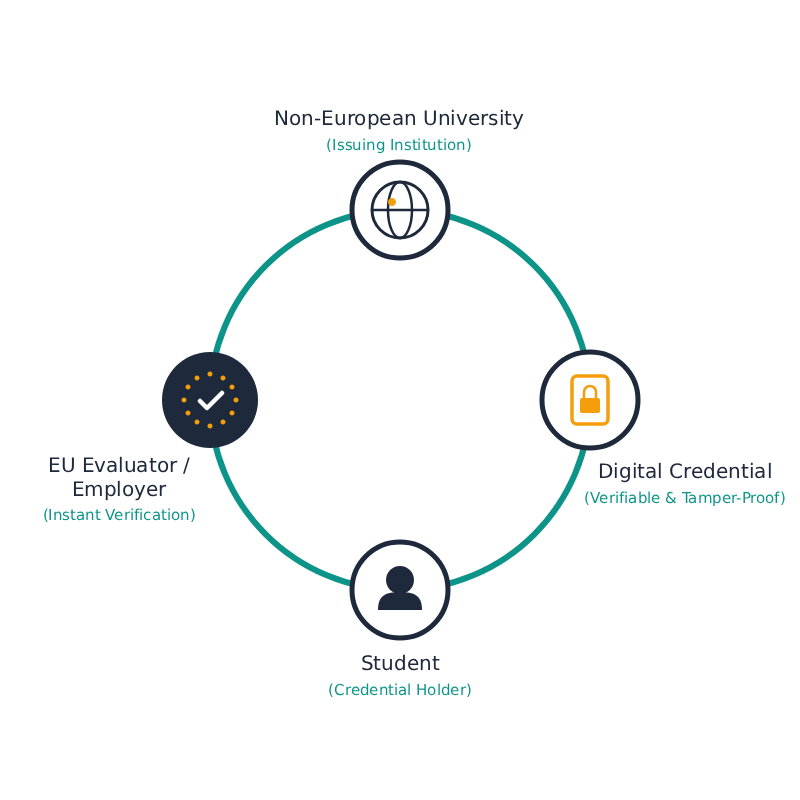
By connecting issuing institutions directly to verifying bodies, evaluators can validate student records instantly, regardless of the credential's country of origin.
Why Infrastructure and Trust Matter More Than the Underlying Tech
Much of the industry conversation around modern credentials focuses on underlying technology like blockchain. However, technology alone does not solve cross-border evaluation challenges.
The real innovation lies in interoperable trust networks. Technology is simply the mechanism, the true value comes from creating a verified, tamper-proof network where universities, evaluators, licensing boards, and employers can interact seamlessly across borders.
Systemic Benefits for the Credential Industry
Adopting verifiable digital credentials delivers distinct advantages across the international evaluation pipeline:
- For Evaluation Agencies & Admissions Offices: Eliminates manual verification emails to non-European registrars, reduces application processing times from weeks to seconds, and eliminates fraud risk.
- For Issuing Universities Worldwide: Enhances international recognition for graduates, reduces administrative burdens on registrar staff, and protects institutional reputation globally.
- For International Students & Professionals: Provides portable, lifetime access to verified academic records that can be shared effortlessly across international borders.
The Expansion into Lifelong Qualification Management
The shift toward global digital verification extends beyond traditional bachelor’s and master’s degrees. The future of international credential management encompasses a broader ecosystem of qualifications:
- Professional licenses and board certifications
- Executive and continuing education credits
- Micro-credentials and technical skills certifications
- Government-issued qualifications and research credentials
Unifying these assets into a verifiable digital structure allows evaluation bodies to assess an applicant's complete professional identity with confidence.
Building Modern Verification Infrastructure with xTID
Modernizing international credential recognition does not require overhauling existing administrative workflows. xTID provides the connective infrastructure that links educational institutions, evaluation bodies, and employers through secure, tamper-proof digital credentials.
By enabling instant, cross-border verification, xTID helps credential managers eliminate evaluation backlogs, prevent credential fraud, and support global academic mobility.
Explore how leading organizations are reshaping cross-border credential evaluation at xtid.io.