Admissions & Security
The Hidden Risks of Admissions Forgery: Authenticating Cross-Border Qualifications in 2026
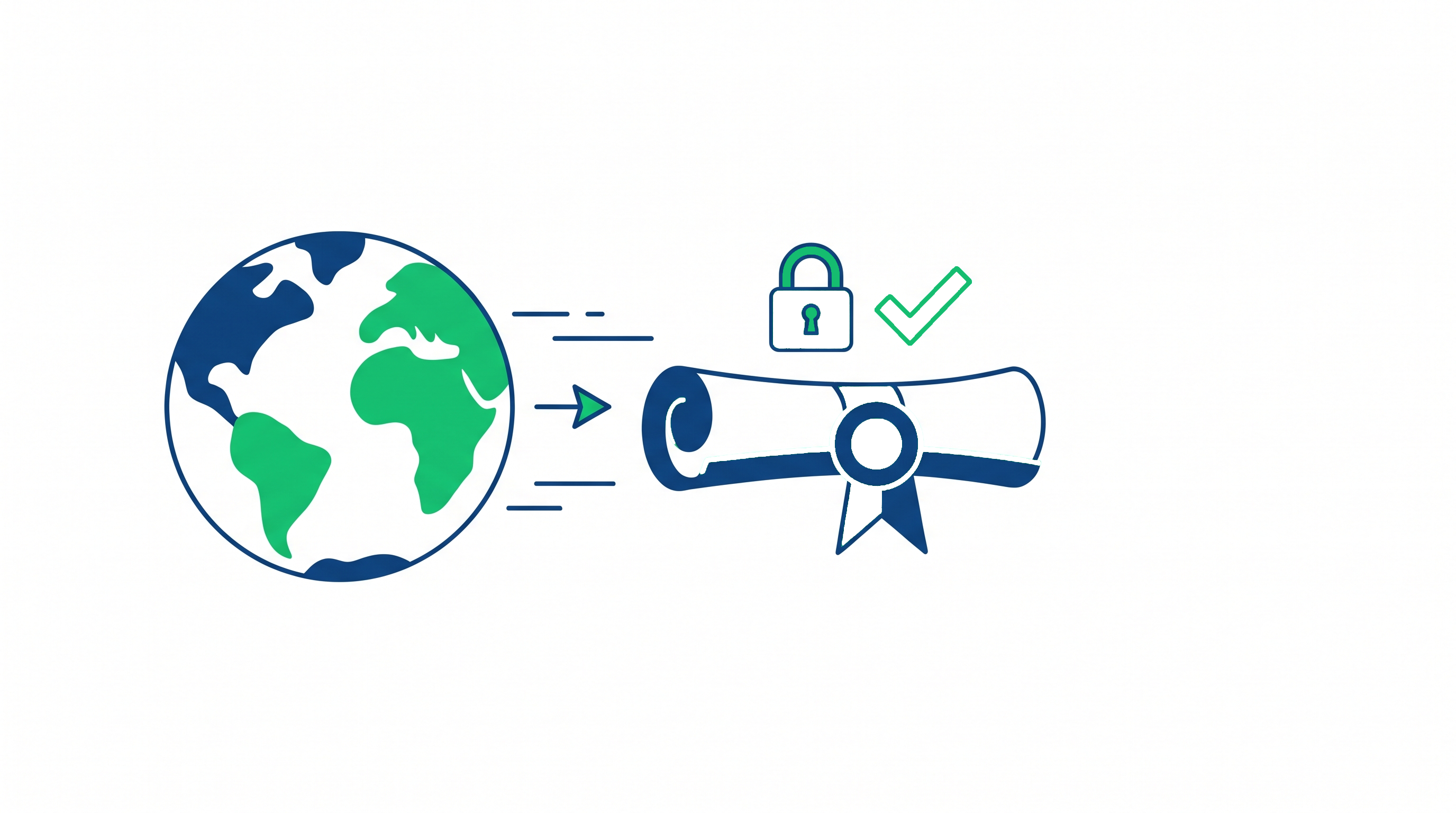
International student recruitment has become the lifeblood of universities across the Global North. Every admissions cycle, institutions in Europe, North America, the UK, and Australasia process tens of thousands of applications from emerging markets across Asia, Africa, and Latin America.
However, evaluating these incoming academic records exposes a profound structural divide. While European universities operate within harmonized frameworks like the Bologna Process and the European Higher Education Area (EHEA), admissions teams evaluating qualifications from outside Europe navigate a fragmented landscape of offline registries, unstandardized grading scales, and unresponsive registrar desks.
In 2026, relying on manual outreach and static document uploads to verify incoming international credentials is an unsustainable institutional risk.
The High Cost of Admissions Blind Spots
When admissions officers and international credential evaluators rely on traditional verification methods for non-European applications, universities suffer across three distinct fronts:
- Operational Paralysis: Contacting remote university registrars across disparate time zones often leads to multi-month dead ends. Power outages, institutional strikes, or offline record-keeping force admissions teams to wait weeks for verification, missing critical enrollment deadlines.
- Academic Attrition: When falsified transcripts slip through the cracks, underqualified students are enrolled in demanding degree programs. The result is high first-year failure rates, increased academic probation, and declining course retention metrics.
- Compliance and Visa Liabilities: In many Global North jurisdictions, an institution's legal authority to sponsor international student visas is directly tied to admissions integrity. Admitting applicants on fraudulent credentials puts government sponsorship licenses and institutional accreditation at severe legal risk.
The Rise of AI-Generated Forgery and Diploma Mill Networks
The days of crude, physical document counterfeiting are gone. Today, generative AI and modern design tools allow bad actors to produce flawless PDF transcripts, complete with convincing watermarks, registrar signatures, and realistic grade distributions from lesser-known institutions.
Beyond individual applicants altering PDFs, admissions teams are up against sophisticated, multi-million-dollar illicit credential operations:
- Global Mill Syndicates: Operations like the infamous Axact network in Pakistan, which sold hundreds of thousands of fake degrees worldwide under fictitious institutional names.
- Systemic Institutional Fraud: High-profile stings such as Operation Index in Bosnia and Herzegovina, and the Operation Nightingale scandal in the United States, where legitimate accreditation pathways were bypassed for thousands of illicit certificates.
- Cross-Border Evaluation Crises: The Benin and Togo Degree Ban (2024–2025), where undercover investigations exposed fraudulent fast-track degree rings used to secure international study visas and public sector appointments.
- Organized Certificate Rings: Recent law enforcement actions in South Asia, including the Kerala Interstate Racket Bust (December 2025 – 2026) and the CCB Bengaluru Raids (June 2026), which uncovered organized networks printing fake certificates for dozens of established universities.
Admissions officers cannot distinguish sophisticated counterfeit documents from authentic records using visual inspection alone.
The Solution: Cryptographic Verification Across Borders
Bridging the verification gap between cross-border institutions requires replacing visual document inspections with real-time cryptographic validation.
When evaluating international records, the vulnerability lies entirely in the intermediary layer, where static PDFs and paper transcripts are intercepted, forged, or delayed. Modern digital trust frameworks resolve this by connecting the issuing university directly to admissions desks via tamper-proof credentials.
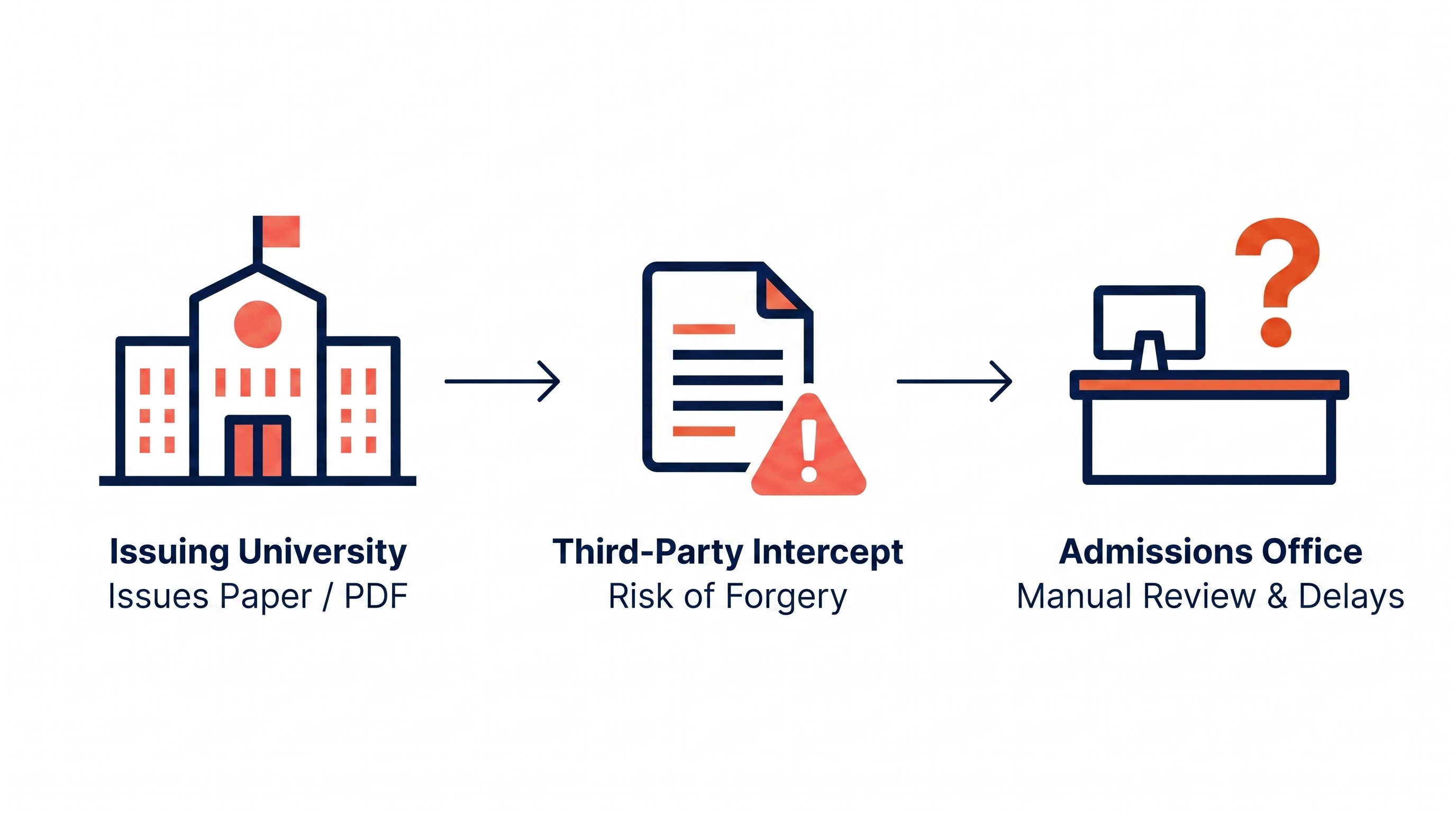
1. Legacy Workflow: The Intercept & Manual Inspection Model
- Issuing University: Produces non-cryptographic records (paper copies or standard PDFs).
- Third-Party Intercept: Documents pass through unverified intermediaries, agents, or email channels, introducing vulnerabilities to AI forgery and diploma mill tampering.
- Admissions Office: Relies on manual document evaluation and unreturned registrar inquiries, creating multi-week backlogs and institutional blind spots.
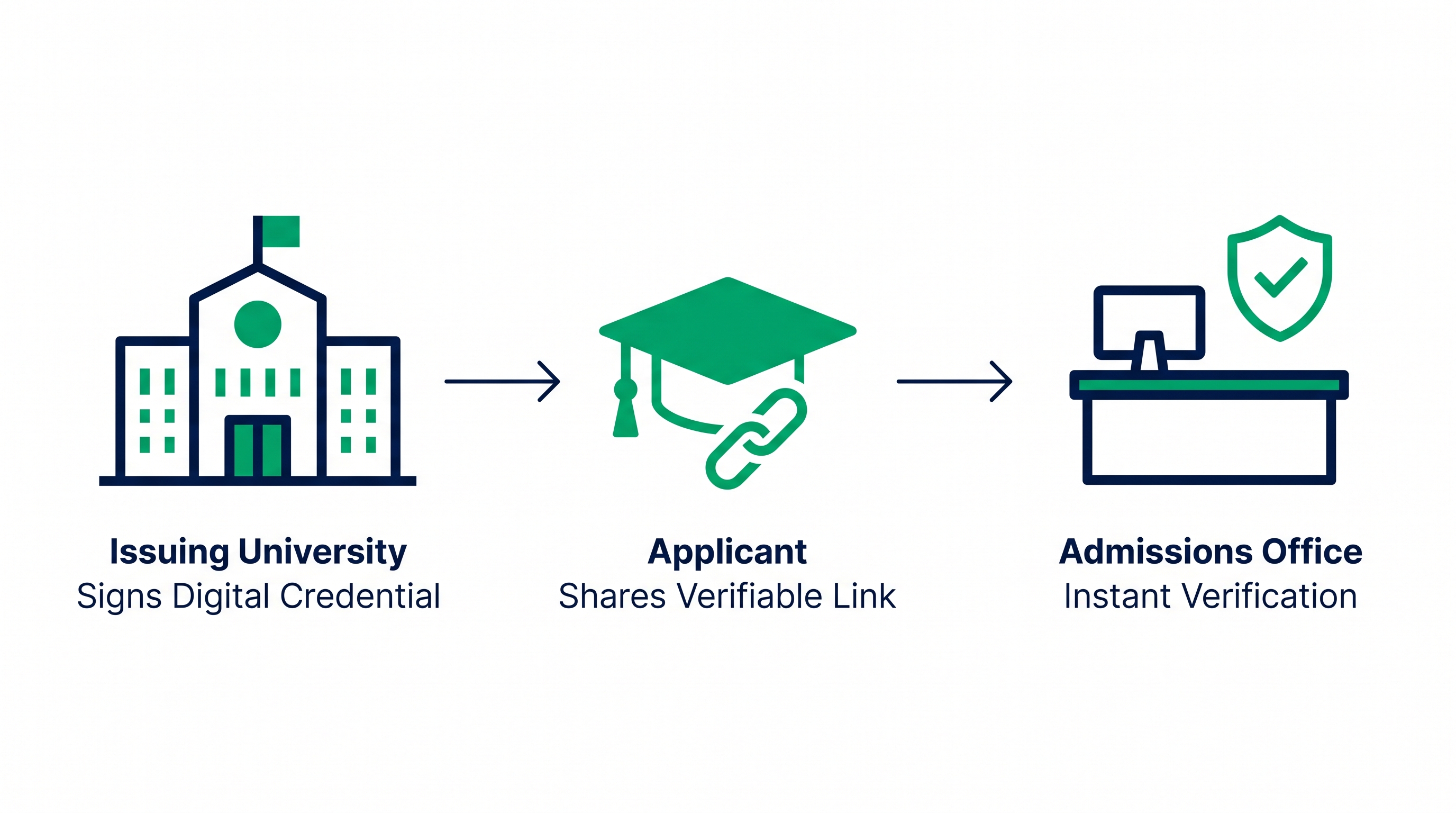
2. Modern Workflow: The Trusted Digital Ecosystem Model
- Issuing University (Non-European): Signs and anchors machine-readable credentials directly to an official issuing registry.
- Applicant: Receives a tamper-proof digital credential and shares a verifiable link or ID with their application.
- Admissions Office (European): Validates the cryptographic signature against official issuing records instantly, without manual outreach.
Protecting Institutional Integrity with xTID
Modernizing international admissions does not mean adding administrative layers or turning away students from emerging markets. Platforms like xTID provide the global connective infrastructure that allows non-European universities to issue tamper-proof, verifiable credentials that European admissions offices can validate in seconds.
By removing the reliance on unverifiable PDFs, institutions eliminate evaluation backlogs, protect their international student sponsorship standing, and ensure that only qualified applicants enter their lecture halls.
Discover how admissions leaders are securing international admissions and eliminating qualification fraud at (https://xtid.io).